



Every time the system is mentioned... college Whether it's vocational training or intermediate-level courses, most parents and students still have reservations because they consider it a lower level of education and believe that vocational training involves strenuous, physical work. This is an incorrect perception. In reality, each level of education has its own requirements regarding knowledge, practical training time, and programs that can be interconnected according to the needs of the learners.
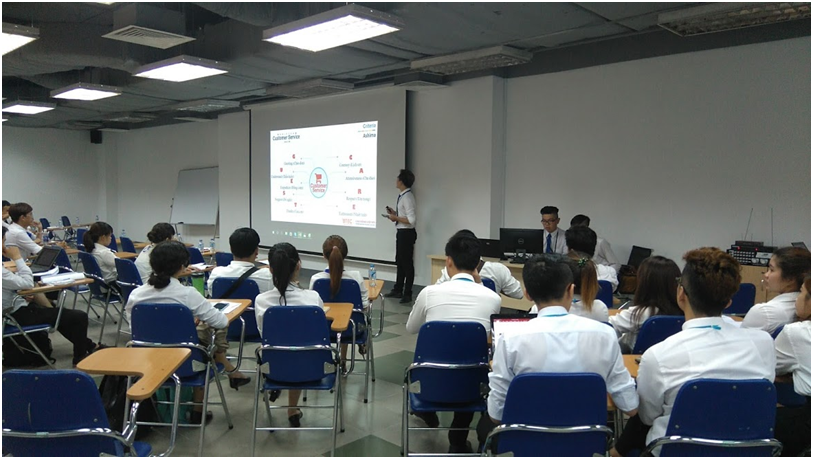
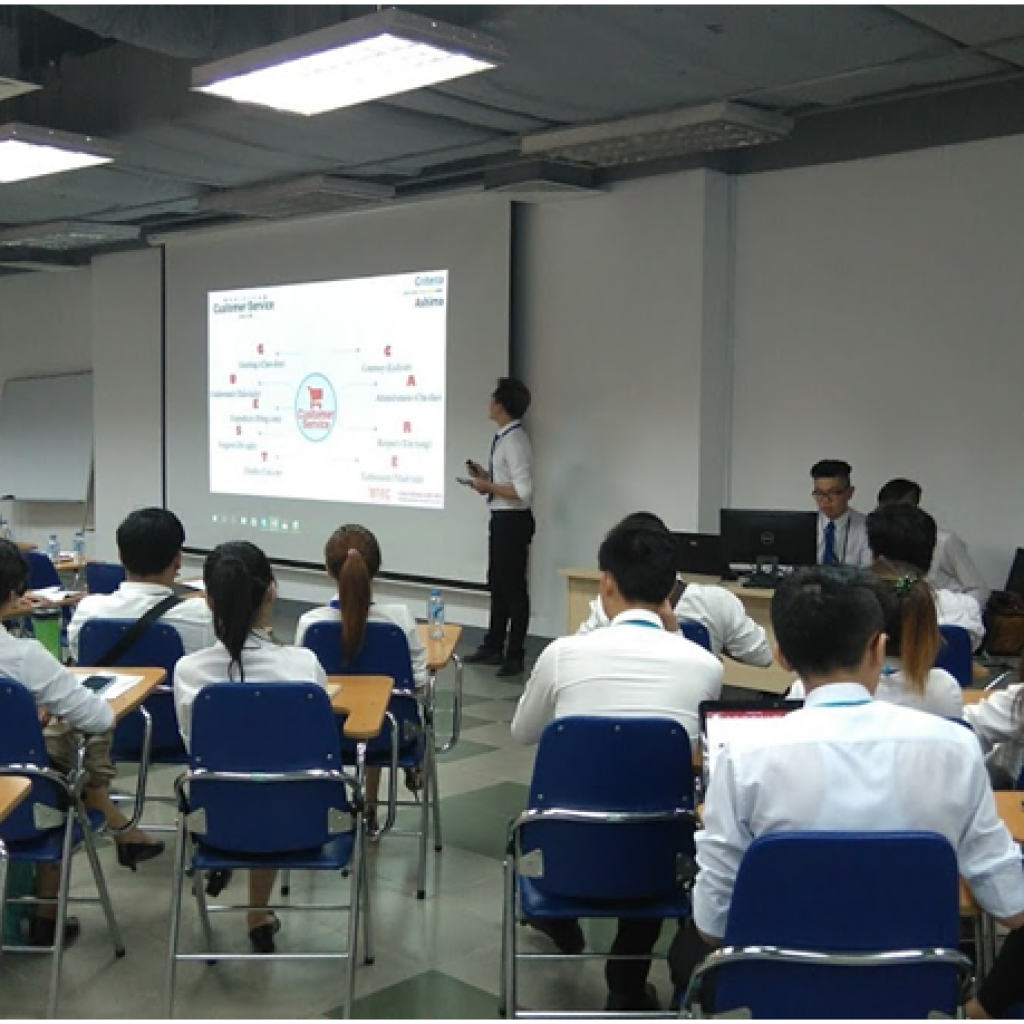
Students from Viet My College during an internship at a company.
Clearing the name of colleges
Currently, many parents still have misconceptions about vocational training, and students are even less aware of the differences between vocational schools and other types of education.
Vocational training here doesn't involve manual labor, but rather the application of knowledge and skills to specific jobs, without delving into theories and research. Vocational training offers learners many job opportunities because of its short duration and extensive practical training, resulting in highly applicable skills. In Vietnam's 8-level national qualifications framework, levels 1-5 (intermediate and college level) represent vocational training, while university level is level 6, master's level is level 7, and doctoral level is level 8. All levels and programs are part of the national education level scale (similar to the UK education system). Each level has its own requirements and can be interconnected according to the learner's needs. The choice of which level to pursue should align with the learner's goals and personal circumstances, and is not dependent on the existing degree. With practical training accounting for 601-701 TP3T of the program, the goal of vocational training programs is to provide learners with sufficient knowledge, practical experience, and the ability to meet the needs of businesses. Accounting, marketing, hotel and restaurant management, travel management, public relations, translation and interpretation.,…
New training trend: hands-on learning to adapt to any situation.
According to media reports in recent years, hundreds of thousands of graduates are unemployed annually, while companies struggle to recruit. In year-end meetings and discussions about workforce quality, the main reasons for the high unemployment rate remain: lack of life skills, inability to adapt to the company culture, and inability to perform the job effectively. Seeking a solution to this problem, people are forced to ask: what is the purpose of education?
Education helps "customers" better prepare for their future. There are educational products designed to target the immediate future, for example, vocational training. Learners can apply what they've learned to improve their lives after a short time. Businesses need people who can meet job requirements, integrate into the culture, and, importantly, are willing to learn and handle pressure, not just those with abstract, detached theoretical knowledge.
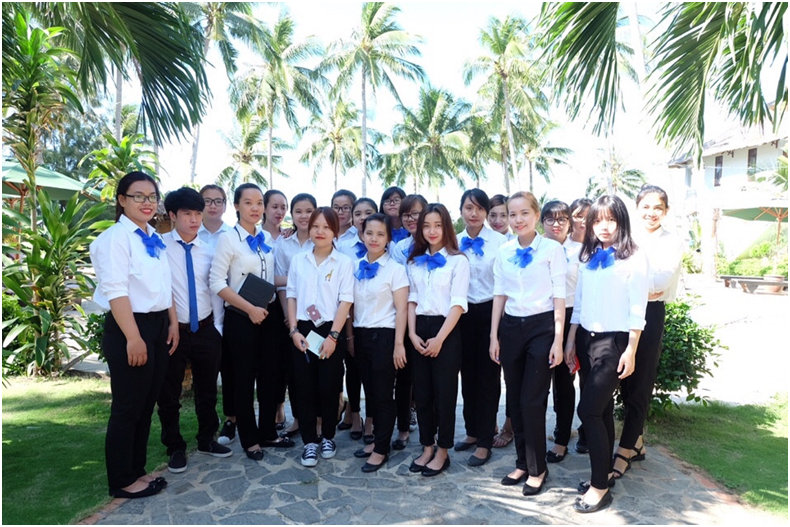
Hotel and restaurant management students on their internship trip.
Responding to the needs of businesses, over the past 10 years, vocational colleges following international educational trends have, to varying degrees, provided the market with a workforce equipped with comprehensive life skills and professional expertise. Accordingly, the main goal of these types of education is to provide professional skills Professionalism according to principles Learning by doing, practicing by doing.. Practical training time of up to 60-70 hours (%) is based on real-world projects and quickly updates to meet the requirements and changes from businesses, helping students get closer to the business environment and "withstand the pressure" when starting their careers.
At Viet My College, from their first year, students have the opportunity to intern at businesses, with a focus on developing skills and work ethics. In addition, the work... career counseling These activities are implemented throughout the learning process, helping students better understand themselves and feel confident in their choices of major and future careers. In addition, students learn through exchange and sharing sessions with leading experts in various fields. The school implements modern training methods that help students gradually approach and solve problems, confidently performing the jobs that businesses need.
Sharing about the school's training orientation, Mr. Duong Tran Minh Doan - Vice Principal of Viet My College, said:“We don't use low-quality products, and neither do businesses; they don't pay for unskilled labor. Mastery requires a lot of practice. At the college level, students have many opportunities to do this. They not only hone their knowledge and professional skills but also accumulate life skills to confidently adapt to the uncertainties of today's digital age. We are delighted to see our students grow and mature day by day, and happy when they share their successes in life…”
According to the newspaper. Education
Author: Pham Phan - Date written: April 21, 2017
Category: The media talks about us.
Tags: college, vocational training, professional skills, practice, practical learning

0 thoughts on “Học cao đẳng – rút ngắn đường đến tương lai”