



A fundamental requirement for language learners is to connect two cultures.
According to statistics, since 2012, 80-90 new Japanese companies have invested in Vietnam annually, and currently there are over 1,600 Japanese businesses investing in Vietnam. Approximately 1,040,000 search results are returned in 0.45 seconds when researching the demand for Japanese-speaking personnel. It's undeniable that the appeal of Japanese to young people today is immense: abundant job opportunities, a transparent work environment, excellent benefits, and career advancement prospects when working in Japanese companies. However, there are some things young people need to understand and consider before entering this attractive field of study.
See more:
- Japanese Business and Trade Interpretation (Part 2): What Makes Viet My College Different
- Businesses are having difficulty finding qualified interpreters.
- Field Trip 2017 – Da Lat: Learn on every path, experience to the fullest!“
Becoming a bridge – the key to success.
A fundamental requirement for a language learner is to connect two cultures in their workplace, especially Japan and Vietnam, which is also a practical requirement of employers. Regardless of your field or specialization, the job of a Japanese language learner is to act as a bridge between two groups of people, including Vietnamese and Japanese personnel, partners, clients, government officials, etc.
Therefore, the responsibility and role of a translator/interpreter is extremely IMPORTANT. This position acts as a bridge leading to the success of a collaborative relationship, a multi-billion dollar contract, etc. It can be said that Japanese interpreters are making a significant contribution to the success of 1,600 Japanese businesses in Vietnam.
Translation – Translation
The difference between Translating and Translation: Translating is converting a word or sentence from one language to another, but without including the content or meaning. Nowadays, anyone can do this very easily, and Google Translate is the best tool to support this task.
Translation, however, is different. The translator must synthesize all the elements—people, circumstances, situations—to produce a complete translation while preserving the original meaning and intent of the speaker/writer, and conveying the intended message accurately.
Therefore, becoming a true Japanese interpreter requires professional knowledge and skills in translation and interpretation, an understanding of the culture and customs of the host country, as well as patience and continuous self-improvement.
There will be tough days grappling with challenging translation contracts, and moments of anxiety and nervousness while interpreting during contract negotiations. But after all, the rewards will be well worth it because you've pushed your own limits.
Simulating shortcomings in training methods.
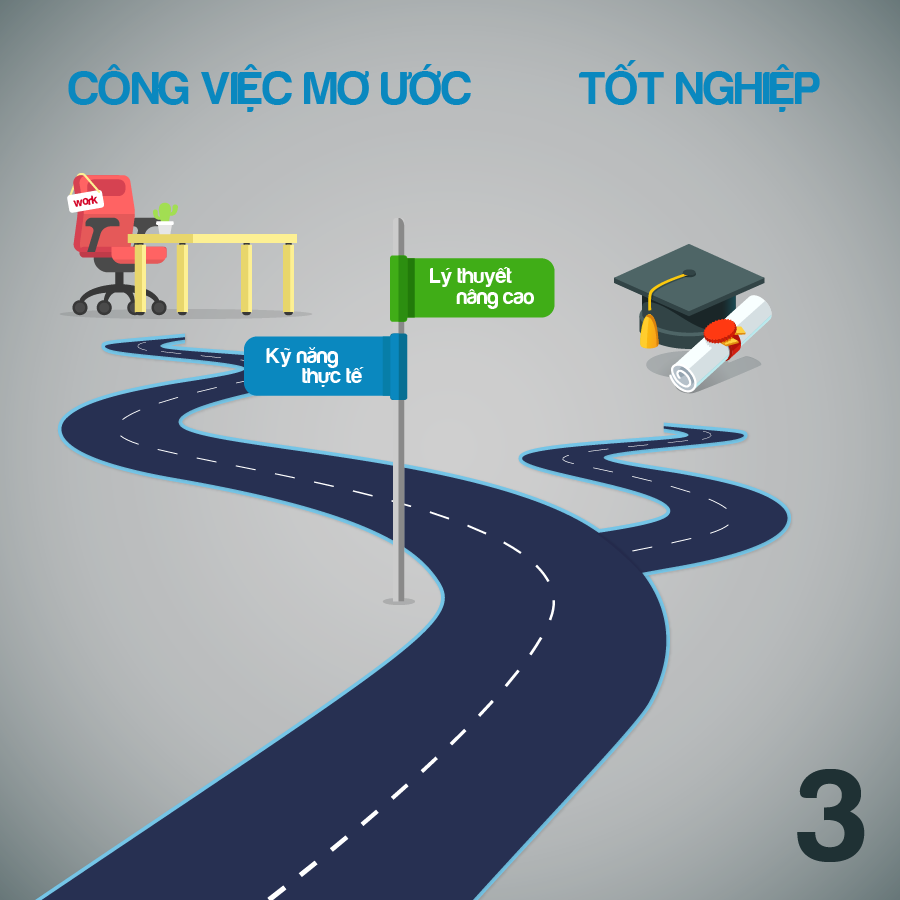
According to VietNamWork, up to 54.71% of Japanese companies are facing difficulties in recruiting Vietnamese employees who are proficient in Japanese and understand Japanese culture to keep up with the company's work pace. In reality, most Japanese language graduates lack a foundation of knowledge in their specific field and have not yet identified their strengths and weaknesses.
As a result, students face knowledge gaps, lack clear direction, fail to meet the requirements of Japanese companies, and especially cannot withstand the pressure of corporate culture regulations. Why? Most translators today say that they "didn't learn" these things during their four years in school and had to start from scratch to supplement their expertise and translation skills to continue pursuing their passion.
This problem is becoming increasingly serious as the number of Japanese language students who cannot meet practical needs, or even translate without being understood by Japanese people, shows that the current training programs and teaching methods are not suitable for the reality.
Recognizing this, Viet My College has developed a training program in Japanese business and commerce interpreting based on the Marugoto textbook, compiled by the Japan Foundation specifically for foreigners learning Japanese.
Link to the article on Giaoduc newspaper: http://www.giaoduc.edu.vn/phien-dich-tieng-nhat-kinh-te-thuong-mai-nhung-dieu-can-biet-truoc-khi-hoc-tieng-nhat.htm
Author: Viet My College - Date written: August 16, 2018
Category: Japanese business and trade interpreter, News - Events
Tags: Regular College Program, Viet My College 2018, Japanese translation

0 thoughts on “Phiên dịch tiếng Nhật kinh tế thương mại: Những điều cần biết trước khi học tiếng Nhật”