




A senior Singaporean minister, who previously headed the country's education sector, argues that favoritism towards universities has a negative impact. The country needs to focus more on vocational training.
Mr. Tharman Shanmugaratnam is a Senior Minister of Singapore and also the Minister for Coordinating Social Policy. He also served as Minister for Education from 2003 to 2008 and was formerly the Deputy Prime Minister of Singapore.
Having a firm grasp of the issues in education and training, the labor market, and social policies, at an economic forum organized by the Peterson Institute for International Economics in the US in May, he raised the issue of promoting vocational training.
Society favors higher education.
According to Straitstimes, Mr. Tharman Shanmugaratnam argues that many countries are paying higher salaries to workers with university degrees, despite the fact that approximately 251% of them do not deserve those salaries.
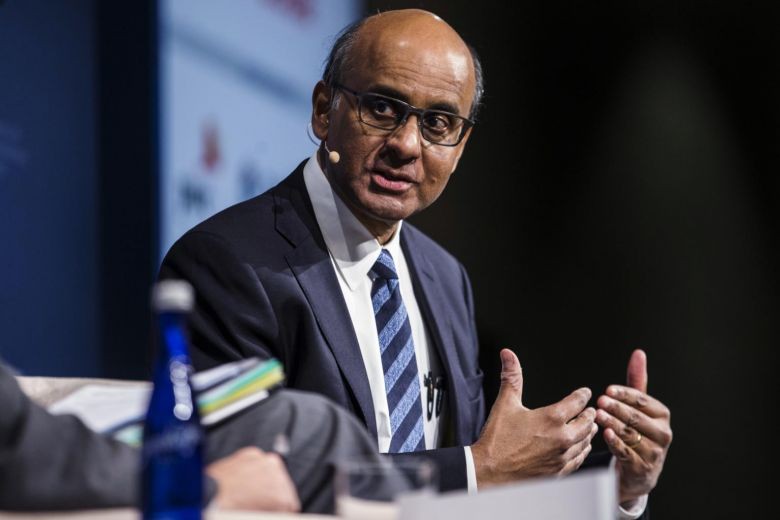
Senior Minister Tharman Shanmugaratnam argues that advanced economies need to focus more on vocational training. Photo: Singapore Ministry of Information and Communications.
According to him, this imbalance leads many students to try to get into university after graduating from college. It also needs to address the state of human resource capacity and the needs of the labor market. Therefore, he called for eliminating the wage gap and focusing more on vocational education in advanced economies.
Meanwhile, in the US, approximately 40% college students are unable to earn their degrees within six years of study. The rate of people with bachelor's degrees who then choose jobs that don't require a degree is also high.
“The issue is not whether young people should go to university or just get a high school diploma. The question is what type of post-secondary education is appropriate and beneficial for learners,” Minister Tharman said.
To address this issue, he suggested that countries need to focus more on vocational education – another path to developing soft skills, creativity, teamwork, and the ability to integrate with different cultures.
“"We have been too biased towards higher education. Now we need to find a balance," he urged.
The senior minister also mentioned that he had witnessed young people in many countries working in laboratories, attending training workshops, and adapting to new things.
This is quite different from reading a new novel. It develops many different skills. Therefore, educators need to help the younger generation develop these abilities so that they can adapt to the changes in life.
He encouraged countries to do so through applied education, specifically vocational training. This type of training is in no way inferior to the liberal arts education model.
Change your mindset.
Furthermore, Mr. Tharman Shanmugaratnam suggested that the labor market also needs to change its recruitment methods, focusing more on candidates' abilities and skills rather than academic qualifications.
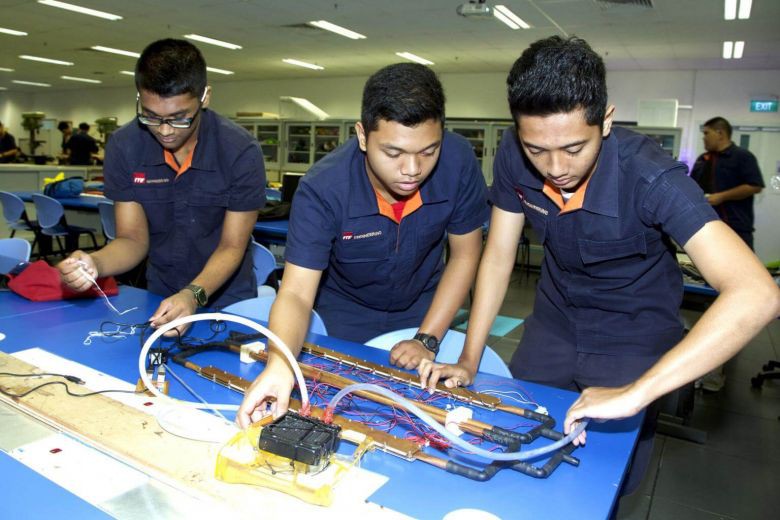
Singapore's vocational education system is well-developed, contributing to the country's highly skilled workforce. Photo: Straitstimes.
Minister Tharman cited the example of the Silicon Valley startup GapJumpers. They developed a "blind hiring" system, posting job challenges online and selecting the highest-scoring candidates for interviews. Therefore, before even assessing a person's abilities, GapJumpers doesn't care who they are, their background, or their educational qualifications.
“"We need to reconsider this recruitment method, firstly to reduce bias in the selection of personnel for the labor market. Secondly, it helps to better connect supply and demand compared to the current common practice," he said.
According to information from the Singapore government's media website, vocational education began to develop in Singapore from the 1950s as the economy shifted from trade diversification to export-oriented industries. Technical education expanded.
But by the end of the 1960s, vocational education had fallen into a slump. Of the 921 students who went on to university, 21 students directly entered the labor market, and only 61 students chose vocational training.
To address this imbalance, the Singaporean government implemented reorganization measures and promoted vocational training. One of the first measures was career guidance from the secondary school level. Vocational training was also introduced from the secondary school level. Technical drawing, mechanics, and electrical engineering became compulsory subjects for all male students and female students (the rest studied economics).
This revised education program helped students gain a basic understanding and develop an interest in specific professions. As a result, by 1972, 20% students were choosing to pursue vocational training.
In 1973, Singapore established the Industrial Training Board (ITB). This board introduced a unified skills identification system based on three levels (craftsman, technician, and master craftsman).
ITB also offers an apprenticeship program that allows learners to participate in the first year of training at a vocational school and on-the-job training for the following two years, helping them to learn and earn income so they can continue their training and become skilled workers.
In 1979, the Vocational and Industrial Training Council was established through the merger of the Industrial Training Council and the Council for Adult Education (VITB). The VITB allows workers to continue their education to improve their skills.
At the same time, the relationship between schools and businesses is strengthened. Companies can send workers back to the school for further training or provide funding for the school to train in the fields where they need manpower.
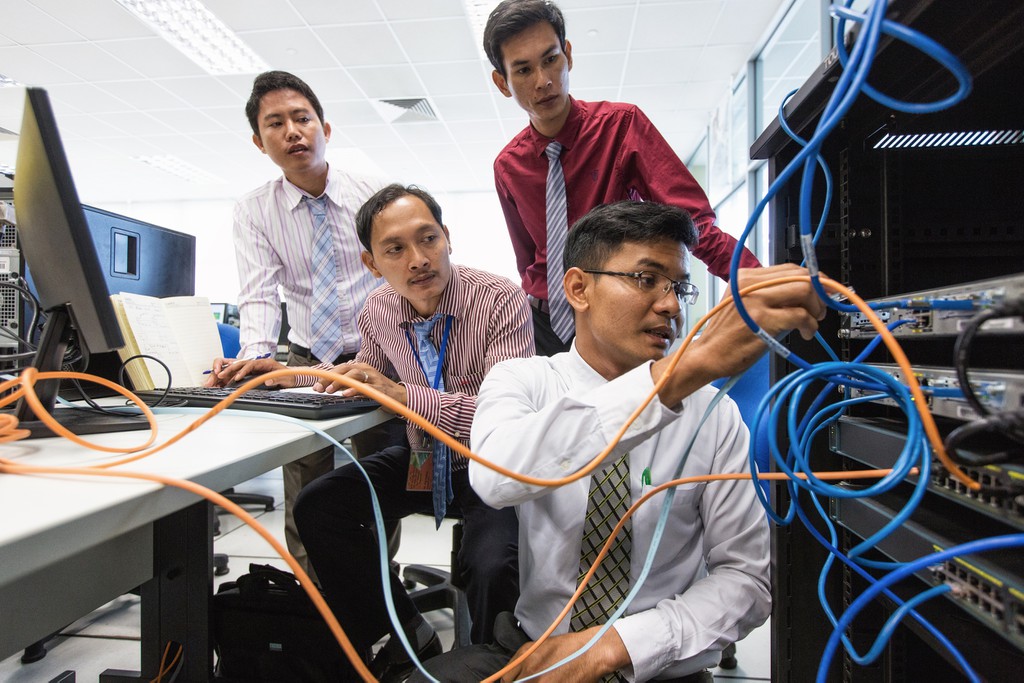
Singapore emphasizes lifelong learning, encouraging workers to attend vocational schools to acquire skills and adapt to new market demands. Photo: Zainalandzainal.
By 1990, Singapore implemented a compulsory 10-year secondary education program to provide a stronger foundation of knowledge, making it easier to retrain workers. Technical programs were introduced in secondary schools to select and guide students who wished to pursue vocational training.
In 1992, VITB was upgraded to the Institute of Technical Education (ITE), offering more advanced vocational training courses. Naturally, they still faced difficulties due to the prevailing mindset that vocational schools are only for underperforming students.
To change students' mindsets, ITE invested in infrastructure development, faculty, and branding. By 2002, the country had five large-scale technical schools, offering students more choices related to service sectors such as retail and hospitality, sports and entertainment, or creative fields like design, media, and filmmaking.
To date, vocational education in Singapore has developed continuously, alongside higher education. The country also encourages lifelong learning, promoting workers to constantly learn new things to meet the evolving demands of their jobs.
Original link: https://news.zing.vn/bo-truong-cao-cap-singapore-keu-goi-chu-trong-dao-tao-nghe-post1016056.html?fbclid=IwAR27RR278OL5ll1QX3m2LsLdwID8eTk9zmbNDEkw8wm2-duAW4TC1jKdAuw
Author: Viet My College - Date written: January 8, 2020
Category: College 9+, Career information, News - Events
Tags: American Polytechnic College, College 9+, Viet My College

0 thoughts on “Bộ trưởng cao cấp Singapore kêu gọi chú trọng đào tạo nghề”