




The main purpose of Japanese language proficiency tests is to assess and test learners' Japanese language skills. Additionally, the certificates obtained will make it easier for you to study abroad or work at companies both domestically and internationally.
So how many Japanese language proficiency tests are there?
If you're unsure about the exam format and scoring system for Japanese language proficiency tests, please refer to the following article. Viet My College will introduce you to the Japanese language proficiency tests currently available in Vietnam.
See more:
Things to keep in mind before taking the Japanese Language Proficiency Test.
Surely, everyone wants to achieve excellent academic results when entering a new semester, right?

To achieve the best results in Japanese language proficiency tests, please keep the following points in mind:
- Practice solving exam questions daily: to get used to the pressure of the exam room, the exam format, and the types of questions in the exam, you should regularly practice solving past exam questions to gradually become familiar with problem-solving methods and allocate time effectively. At the same time, you can also get a general assessment of your current abilities and identify areas you don't understand so you can address them immediately.
- Allocate your rest time wisely: Regular studying and practice are necessary, but excessive pressure in the days leading up to the exam will significantly affect your results. Therefore, carefully divide your study time and rest time before the official exam.
- Prepare your paperwork well: To avoid wasting time or forgetting necessary documents before entering the exam room, gather all the necessary documents and supplies into one bag or backpack, putting everything in as you remember. Don't let your hard work studying ruin your exam because of a small, avoidable incident.
Introduction to Japanese Language Proficiency Tests
In order to be able International Japanese interpreter To become proficient, you need a good foundation of knowledge and to pass Japanese language proficiency tests to demonstrate your abilities.
The JLPT proficiency test is probably quite familiar to many of you, but there are other Japanese language proficiency tests such as NAT TEST and TOP J. To understand these three tests better, please refer to the following content.
Japanese Language Proficiency Test – JLPT
Introduction to the JLPT exam:
JLPT stands for Japanese Language Proficiency Test. It's a widely popular and reputable Japanese language proficiency test administered by the Japan Foundation, an organization under the Japanese Ministry of Foreign Affairs. Currently, JLPT is available in 65 countries worldwide. To assess a candidate's ability, the JLPT is divided into five levels: the highest (N1) and the easiest (N5).
- Eligibility for the JLPT exam: The JLPT exam is open to all individuals worldwide, regardless of age, religion, ethnicity, or gender, even if their native language is not Japanese.
- The exam in Vietnam is held twice a year, on the first Sunday of July and December. The first exam, in July, is held exclusively in Hanoi.
How the JLPT Japanese Language Proficiency Test score is calculated:
Each JLPT Japanese language proficiency test has a total score of 180, and depending on the total score, candidates will be awarded a certificate. Specifically, as follows:
- Japanese Language Proficiency Test Level N1: To achieve Japanese Language Proficiency Test Level N1, candidates need a total score of 100 points.
- Japanese language proficiency level N2: requires candidates to achieve a total score of 90 points on the exam.
- Japanese language proficiency level N3: at this level, candidates need to achieve a score of 95 points.
- Japanese Language Proficiency Test Level N4: The total score required to be recognized as N4 is 90 points on a single test.
- Japanese Language Proficiency Test Level N5: This is the easiest level in the JLPT exam, so candidates only need to achieve a total score of 80 points.
When taking the JLPT Japanese Language Proficiency Test, your Japanese language proficiency will be assessed across three sections: language knowledge, reading comprehension, and listening. The maximum score for each section is 60 points. To have your test score accepted for each section, candidates must meet the following criteria:
- Language knowledge: the minimum total score is 19 points.
- Reading comprehension skills: a minimum of 19 points.
- Listening comprehension skills: above 19 points.
Japanese Language Proficiency Test – NAT TEST:
Overview of the NAT-TEST Japanese Language Proficiency Test:
The NAT-TEST Japanese language proficiency test is an exam for anyone needing a certificate assessing their Japanese language proficiency. First held in 1988, the NAT-TEST has since become popular in many countries such as Vietnam, Indonesia, South Korea, India, China, etc. The NAT-TEST Japanese language proficiency test is administered by the NAT-TEST committee.
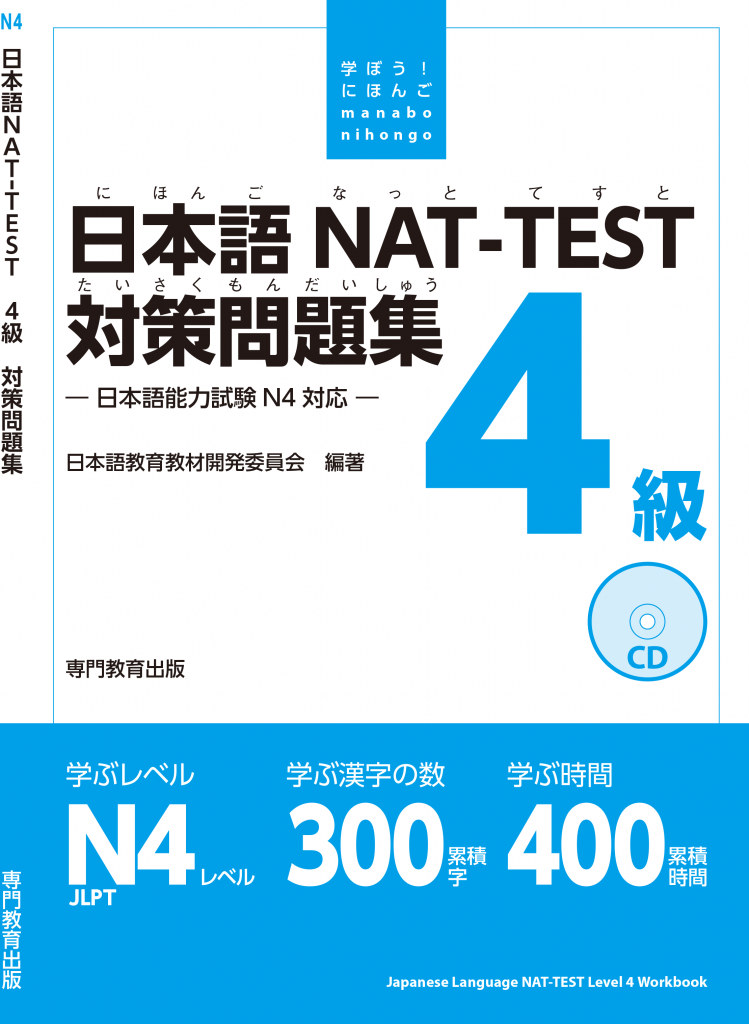
Similar to the JLPT, the NAT test assesses Japanese language proficiency by requiring candidates to pass tests on language knowledge (vocabulary, grammar, sentence structure), reading comprehension, and listening comprehension. The test is held six times a year in February, April, June, August, October, and December.
How the NAT-TEST Japanese Language Proficiency Test scores are calculated:
The NAT-TEST Japanese language proficiency test is divided into 5 levels, from 1Q to 5Q, where 1Q is the highest level and 5Q is the basic level. The scoring method for the NAT-TEST test is as follows:
- For level 1Q: to reach the advanced level you need to score 100/180 points.
- Level 2Q: This is an intermediate-to-advanced level of Japanese proficiency; therefore, to achieve the 2Q certification, you need to score a total of 90 points on the exam.
- Level 3Q: Intermediate Japanese proficiency. To pass the NAT-TEST 3Q certification, the total score required is 95/180 points.
- Level 4Q: Beginner level Japanese proficiency, requiring candidates to score 90 points on the exam.
- Level 5Q: Basic level of Japanese language proficiency, a relatively moderate score with a total score requirement of 80/180 points.
Japanese Language Proficiency Test – TOP J:
A brief introduction to TOP J:
This is the newest exam held in Vietnam in recent years, the TOP J Japanese Language Proficiency Test, organized by the Asian Foundation for International Exchange Scholarships. The difference with the TOP J exam is that candidates do not fail; instead, the results are based on the level of proficiency achieved. Results are graded on an A, B, C scale.

The exam is held regularly, six times a year: in January, March, May, July, September, and November. Candidates need to register for the exam three weeks in advance.
How to calculate scores for the TOP J Japanese Language Proficiency Test:
Unlike the JLPT or NAT-TEST Japanese language proficiency tests, the TOP J exam assesses candidates based on A, B, and C levels, each corresponding to a specific score as follows:
- To achieve level A (the highest level), candidates need a total test score ranging from 265 to 500 points. This includes a listening score of 150-225, a vocabulary score of 95-175, and a reading comprehension score of 55-100.
- To achieve level B (intermediate level), the total test score needed should be between 220 and 260, with listening scores between 105 and 120, vocabulary scores between 80 and 90, and reading comprehension scores between 45 and 50.
- To achieve level C (basic level), candidates need to have a total score of 175 to 215 on the exam, with listening scores ranging from 85 to 100, vocabulary scores from 65 to 75, and reading comprehension scores from 35 to 40.
Instructions on how to register for the Japanese Language Proficiency Test in Vietnam:
To register for the Japanese Language Proficiency Test in Vietnam, candidates need to go to the nearest test location to purchase an application form, fill out the required information, and pay the test fee. Note: You need to register at least 3 weeks before the test date, and please prepare two 3x4 photos to attach to your application.
Here are a few things to keep in mind when filling out the Japanese Language Proficiency Test application form:
- Use a ballpoint pen to fill out the exam registration form. The form consists of 5 consecutive sheets; however, you only need to fill in the first sheet, and the information will automatically print onto the sheets below.
- Please carefully review the registration form to avoid making any corrections or erasures during the application process.
- When writing your name, please try to write it clearly to avoid confusing your exam results with those of other candidates.
- Carefully double-check your personal information before submitting it to the exam organizer.
Hopefully, this introduction to Japanese language proficiency tests will help you gain a clearer understanding of the various Japanese language proficiency certificates available in Vietnam. Please share this information with your friends so they can learn more too!
American Polytechnic College (APC)
Zhongshan Campus:
- Address: Numbers 5-7-9-11, Street No. 4, Trung Son Residential Area, Ho Chi Minh City
- Phone: (028) 5433 6888
- Hotline: 0938 90 5050 | 090 2858 550
Go Vap branch:
- Address: 1A Nguyen Van Luong Street, Ward 6, Go Vap District, Ho Chi Minh City
- Phone: (028) 7302 5888
Can Tho branch:
- Address: 135P Tran Hung Dao Street, An Phu Ward, Ninh Kieu District, Can Tho City
- Phone: (0292) 3.832.045
- Hotline: 0937 91 0212
Training programs/fields of study:
UK INTERNATIONAL COLLEGE SYSTEM:
- BTEC HND in Hospitality Management
- BTEC HND in Business (HRM – Human Resource Management)
- BTEC HND in Business (Marketing)
- BTEC HND in Business (Accounting and Finance)
- BTEC HND in Art and Design
REGULAR COLLEGE PROGRAM:
- Management group
- Translation and Interpretation Group
- Information Technology Sector
- Healthcare sector
- Design field
E-mail:
- Admissions Office: info@caodangvietmy.edu.vn
- Training Department: phongdaotao@caodangvietmy.edu.vn
- Student Services Office: dichvusinhvien@caodangvietmy.edu.vn
Author: Viet My College - Date written: April 11, 2019
Category: Japanese business and trade interpreter

0 thoughts on “Giới thiệu về các kỳ thi năng lực tiếng Nhật”