



Study Fashion Design at Viet My College, from idea development to actual product, connecting personal stories with market needs.

Figure 1: The 6th annual “SR Celebrating Local Pride” fashion show.
Source: Style-Republik.
NEW CONTEXT AND TRENDS IN THE FASHION DESIGN INDUSTRY IN VIETNAM
The Vietnamese fashion design industry is witnessing unprecedented growth. Domestic brands are constantly emerging, offering products that are not only aesthetically pleasing but also possess unique stories and styles, allowing wearers to express themselves. Today's customers don't just buy clothes; they buy messages, lifestyle "taste," and distinction. This trend demonstrates that fashion is not merely about aesthetics, but increasingly emphasizes creative thinking linked to commercial value – something that already existed and is now more valued than ever. While the economy is gradually recovering from the global crisis, the unemployment rate among young workers remains high. As of the first six months of 2025, the unemployment rate for youth (aged 15-24) was 8,061 TP3T, a slight increase of 0.06 percentage points compared to the same period last year (General Statistics Office, 2025).

Figure 2: T-Rex, one of the local brands showcasing at the DEPA fashion show.
Source: Streetvibe.vn
Generation Z (those born between 1997 and 2012) and Millennials (those born between 1981 and 1996) are spending heavily on bespoke products and small, local brands with compelling content and stories behind each item. Therefore, the role of a fashion designer never stops at sketching; it always extends from concept creation and brand development to connecting products with real-world needs. Creative, design, communication, and stylist professions continue to be in high demand, but also require increasingly stringent practical skills. Many local brands are willing to pay well to individuals who can transform ideas into tangible products, work flexibly in teams, and are capable of starting small companies (3-5 employees) or working independently.

Figure 3: A lecture slide for the course Principles of Fashion Design. Source: Professor Tran Hoa Thuan.
The Vietnamese retail fashion market is showing significant growth potential. According to FiinGroup's forecast, the Vietnamese fashion market will reach a value of US$3.5 billion by 2025, with an annual growth rate of 9-10% (Bao Moi, 2025; Petrotimes Magazine, 2025; Baodautu.vn, 2025). This growth is driven by both international fast fashion brands like Zara and H&M (leading in revenue per store) and domestic brands, especially niche brands (Dirty Coins, Lsoul, Fanci Club, etc.) which are continuously developing. This shows that the market urgently needs creative design workers with practical applications to meet the growing demands of customers (many people study but few are capable, lacking understanding of processes and a commercialization mindset for products).

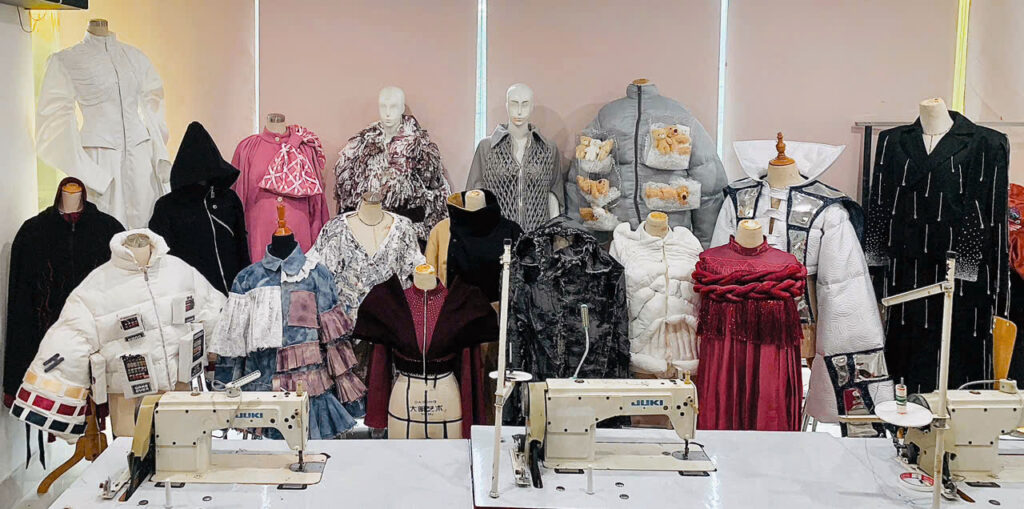
Figure 4: Students practicing sewing at the school. Source: Viet My College.
Understanding this, Viet My College has developed its Fashion Design program by shortening theory, significantly increasing practical training, and teaching in a way that truly meets market needs. Students don't just learn theory on paper but practice directly: observing, creating moodboards, developing concepts, selecting materials, and building a story for their designs. More importantly, students understand from the outset that a commercial product, no matter how beautiful, is meaningless if it doesn't sell or meet the needs of the target customers.

Figure 5: Student portfolio after each project. Source: Student Do Nguyen Tu Uyen.
FROM FUNDAMENTAL SUBJECTS TO WIDESPREAD CAREER OPPORTUNITIES
The Principles of Fashion Design is a foundational yet crucial subject in the learning process. It's no longer a dry lecture or formulaic note-taking session, but rather a stage where each student learns to ask: What is beauty? What story do I want my product to tell? Through techniques such as image collage, moodboarding, and concept development, students learn to connect images, organize stories and styles, and tell a story that others can see, believe in, and readily own.

Figure 6: Students creatively design according to their own personality using the Collage technique.
Source: Teacher Tran Hoa Thuan.
Students who lack confidence in hand-drawing are not limited because they can start by observing, selecting, discarding, combining, and adjusting to develop their product from the most basic steps. As consumer trends change rapidly, the market demands young people who not only have aesthetic sense but also are observant, proactive, and unafraid to practice. From their initial collage moodboard, students gradually develop more refined concepts, complete collections, small brands, and actual product images for sale.

Figure 7: Student's results after practicing the Collage technique.
Source: Teacher Tran Hoa Thuan.
Many young people think that studying design is only for becoming a designer, but in reality, the path is much broader. From the Principles of Design course, students can develop personal brands, create fashion store visual merchandise, manage stores, work as image consultants, collaborate on creative content for small brands, or become freelance stylists.

Figure 8: Experiential learning session: Exploring the behind-the-scenes of professional fashion photography.
Source: Teacher Tran Hoa Thuan.
STUDY FASHION DESIGN: UNDERSTAND THE PROFESSION, UNDERSTAND THE MARKET, UNDERSTAND YOURSELF
Studying Fashion Design isn't just about dressing well for yourself, but about understanding how to create beauty, why customers need it, the story behind the product, and most importantly, understanding what you can create that's even more innovative. At Viet My College, this is standardized through a clear learning roadmap, demonstrated through each lesson, practical session, and project. Upon completion of the course, each student can confidently present their own products to the market.
Introducing the full-time lecturers in the Fashion Design program.

Mr. Tran Hoa Thuan, a lecturer in Fashion Design, graduated from Hoa Sen University and has extensive practical experience. He consistently supports students by sharing strategic, feasible, and highly applicable design thinking. In addition to teaching, he undertakes personal projects to stay updated on trends, experiment with new ideas, and provide students with a practical perspective.
Contact information:
Design Department – Viet My College HCM
Website: ktk.caodangvietmy.edu.vn
Email: ktk@caodangvietmy.edu.vn
Source:
- Mensfolio Magazine – mensfolio.vn
- Street Vibe Magazine – streetvibe.vn
- News Report. (March 10, 2025). The Vietnamese fashion market reached a value of US$3.5 billion.
- Petrotimes Magazine. (2025, March 5). The Vietnamese fashion market will reach US$3.5 billion this year.
- General Statistics Office. (2025, first six months). Press release on the labor and employment situation in the second quarter and the first six months of 2025.
Author: Design Department - Date written: July 16, 2025
Category: Fashion design, DESIGN GROUP, News - Events, Uncategorized

0 thoughts on “HỌC THIẾT KẾ THỜI TRANG: MỞ RỘNG TƯ DUY – TẠO GIÁ TRỊ THẬT – LINH HOẠT NGHỀ NGHIỆP”