



The Public Relations (PR) training program is tailored to the needs of businesses.
This was the assessment of businesses from media companies and newspaper editorial offices at a workshop evaluating public relations training programs according to standards. CDIO organized by Viet My College recently.
CDIO (English) Conceive – Design – Opportunity – Operate, CDIO stands for Conceptualization, Conceptual Design, Implementation, and Operation, originating from the MIT Institute of Technology (USA). To date, this model is increasingly adopted by universities and colleges worldwide. Essentially, CDIO is a solution to improve the quality of education and meet societal demands by defining learning outcomes and then designing curricula and training plans. This process is scientifically and logically structured and can be applied to many different fields of study.
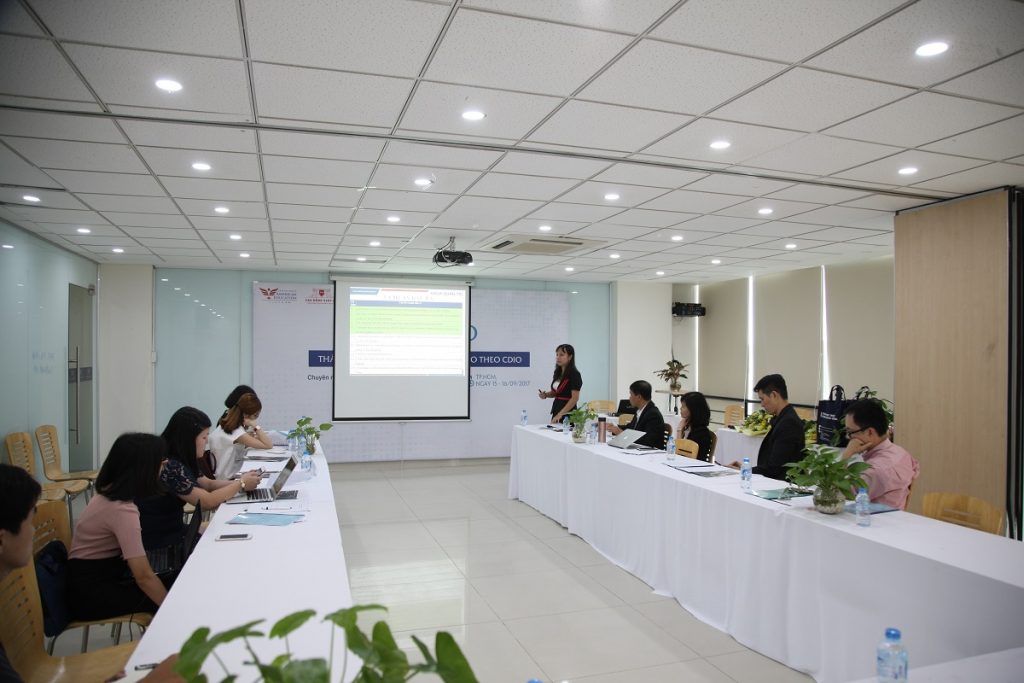
Learning by doing
In recent years, Public Relations (PR) industry Although it is a relatively new field of study, its appeal stems from the ever-increasing demand in the labor market, making it attractive to many students.
To help PR graduates meet the demands and work in a high-pressure environment at businesses, and to equip them with the necessary knowledge, skills, and professional work attitude, the Faculty of Management at Viet My College has developed a PR training program based on the CDIO standard.
Unlike the training programs of some other colleges, Viet My College trains students with a strong emphasis on practical skills. In the first semester, students will learn study skills, computer skills, English, and an introduction to their chosen field of study to guide their career path and develop essential skills throughout their studies. Courses in politics, law, and physical education will be spread out over the final semesters before students complete their graduation internship.
With a training philosophy of "Learning by Doing," practical training accounts for 70% of the curriculum. Students directly participate in programs such as company visits, internships, and work placements from their first year. Simultaneously, they develop skills such as critical thinking, problem-solving, and teamwork. The Faculty of Management applies Digital Marketing technology to all training programs, with the PR program being closely related to this subject, following the current PR 2.0-4.0 trends.

The PR program, based on the CDIO framework, helps students develop five key skills: English language skills, communication skills, creativity, teamwork skills, and CDIO skills (which stand for: idea generation, idea design, implementation and operation, and proposing improvements).
In addition, the Faculty regularly invites experts and managers from media companies to share their knowledge at seminars and classes, helping students gain practical experience and learn about the working environment. The Media Club consists of three departments: Content Department, Events Department, and Photography Department, run by PR students who organize events and competitions to provide students with practical experience in applying the professional knowledge they have learned in their field of study.
Internal communication and writing skills are very important.
Commenting on the PR training program, Ms. Huynh Thi Thuy Trinh – Editorial Secretary of Young Style Magazine, Young Media Company, believes that writing skills, teamwork skills, and public speaking skills are very important. In addition, internal communication and customer communication skills should be added to the business communication course.

Ms. Nguyen Thi Thanh Nga – PR Manager of Dien Quan Media and Entertainment Company – expressed great satisfaction with the school's PR training program and assessed the training content as very suitable to the needs of businesses.“Internal communication is an essential part of PR, alongside external communication. In large companies, internal communication is often handled by one or two dedicated staff members to ensure employee engagement, better information flow, and smoother business operations.”"Ms. Nga shared
Furthermore, Ms. Nga noted that Corporate Culture and Business Ethics are very important and necessary subjects for the PR field. The current situation shows that students are changing jobs too frequently simply because they don't understand the corporate culture. At the same time, Ms. Nga also highly appreciated the school's allocation of the 30% theoretical and 70% practical training program.
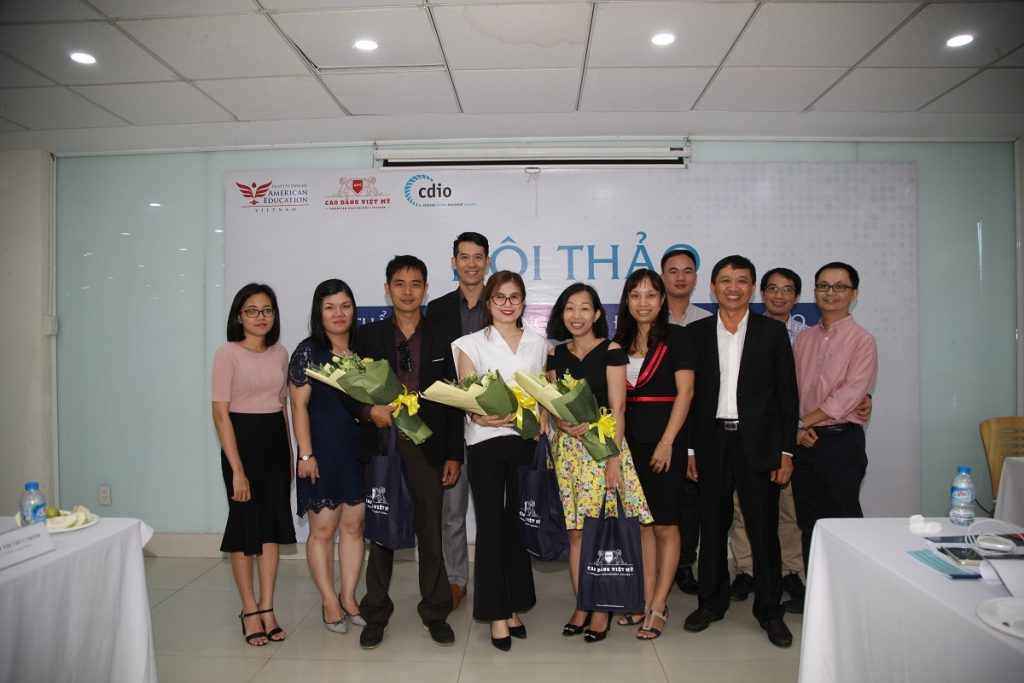
According to Mr. Vu Ba Thuan, Director of the One-Member Limited Liability Company, the school's focus on English language training for PR students is essential because most of the materials in this field are currently from foreign sources, and Vietnamese materials are very slow to update to global media trends. Like Ms. Nga, he highly appreciates the training in Corporate Culture and Business Ethics. However, he believes that crisis management skills require students to accumulate a large amount of specialized knowledge, so it should be moved to the 6th semester, before practical training at businesses in the 7th semester.

In addition, businesses also shared about the high-pressure work environment in the media industry, which requires students to be able to withstand high pressure, be patient, diligent in learning, and creative in designing ideas.
Representatives from various businesses unanimously agreed that writing skills are crucial for students studying PR. Especially since companies often need to work with journalists, figuring out how to consistently publish PR articles while maintaining a professional writing style requires significant practice from the students.
Based on feedback from businesses, lecturers in the PR program, under the Faculty of Management, will design a CDIO-based training program framework that best suits the needs of businesses.
Author: Viet My College - Date written: September 28, 2017
Category: Public relations
Tags: What is CDIO?, public relations, CDIO appraisal

0 thoughts on “Hội thảo thẩm định CDIO ngành Quan Hệ Công Chúng”