



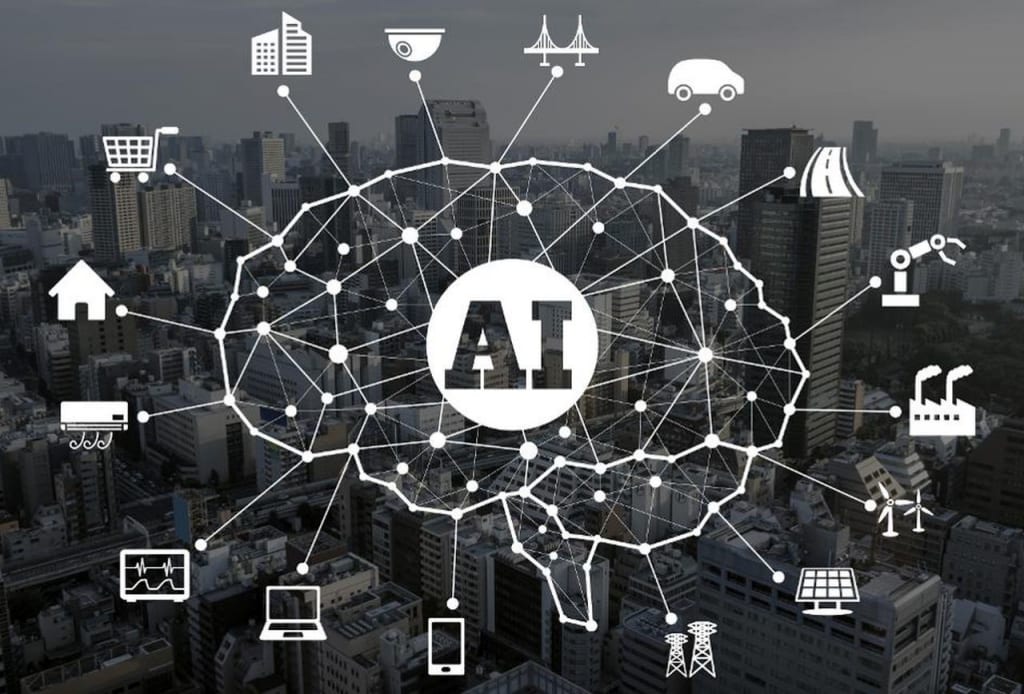
We're not really creating "artificial intelligence," but rather computer programs to perform specific tasks.
According to Howtogeek, When a company announces the launch of a new AI feature, it means they are using machine learning technology to build an artificial neural network specifically for that feature. Machine learning helps devices “learn” how to perform specific tasks better.
Machine learning is clearly a wonderful technology with many powerful capabilities. However, machine learning cannot yet create universal artificial intelligence, and once you understand its limitations, you will understand why current AI technology remains restricted.

Computers cannot "think".“
In science fiction, the term "artificial intelligence" describes a type of computer or robotic brain that can think and truly understand things in a similar way to humans. This should be called "artificial general intelligence" (AGI) because it possesses the ability to think about many different things and apply those thoughts to various situations and fields. Another related concept is "strong AI," a computer capable of experiencing consciousness like a human.
But we haven't yet created the kind of AI described above, and it will be a long time before that happens. Therefore, Siri, Alexa, and Cortana currently cannot truly understand and think like humans. The AI features we commonly see are simply those that have been taught to perform specific tasks based on data provided by humans. They only learn how to do something, but don't understand why they have to do it.
Computers cannot "understand".“
For example, Gmail offers a "Smart Reply" feature that suggests phrases when you reply to emails. The feature identifies words you frequently use and suggests them for your next email. If you use "I love you" often, it will suggest this phrase in many subsequent emails, even when you're sending work emails.
That's because the computer doesn't fully understand the meaning of the phrases; it only learns that many people use these phrases when sending emails and has no idea whether you intend to send "I love you" to your boss or not.
How machine learning and artificial neurons are used.
With machine learning technology, computers are not programmed to perform specific tasks, but are provided with data to "learn" how to complete the task to a certain extent.
The simplest example is using machine learning to create image recognition features. We would "train" a computer program to identify which pictures contain cats. To do this, we could provide the computer with millions of images, a mix of those with and without cats. The images are labeled so the computer knows which ones contain cats and which don't. The program then automatically learns what cats look like based on the number of images provided.
Machine learning is used to “train” an artificial neural network – a computer program with multiple layers of input data analysis to make a final decision. It mimics how our brains work, with multiple layers of neurons involved in thinking about a problem.
Returning to the example, after providing an image to an artificial neural network, we give the system a test to determine whether its result is correct or incorrect. If the system identifies an image as not containing a cat, but it actually does, then a sophisticated mechanism is used to help the system realize its mistake, adjust its behavior, and allow it to "learn" again. After each such instance, the computer becomes better at identifying cats in images.
Swipe right to view
 |
All of these processes can happen completely automatically. If the right software is used and various types of structured data are provided to the computer, it will automatically adjust its artificial neural network to identify the cat in the image. And we call this "artificial intelligence" – AI.
We haven't actually created an intelligent computer system that understands what a cat is or why we need to look for a cat in a picture. Instead, this computer simply learns to decide whether or not there's a cat in a picture, based on criteria we provide. This is quite impressive, but that's all the computer can do, nothing more.
According to Thanh Nien newspaper.
Author: Viet My College - Date written: January 22, 2019
Category: News - Events
Tags: Viet My College 2019, Industry 4.0

0 thoughts on “Vấn đề của trí tuệ nhân tạo là gì?”